Ndutu
400,000 wildebeest calves in six weeks. Every predator in the ecosystem watching.
Plan a Safari Here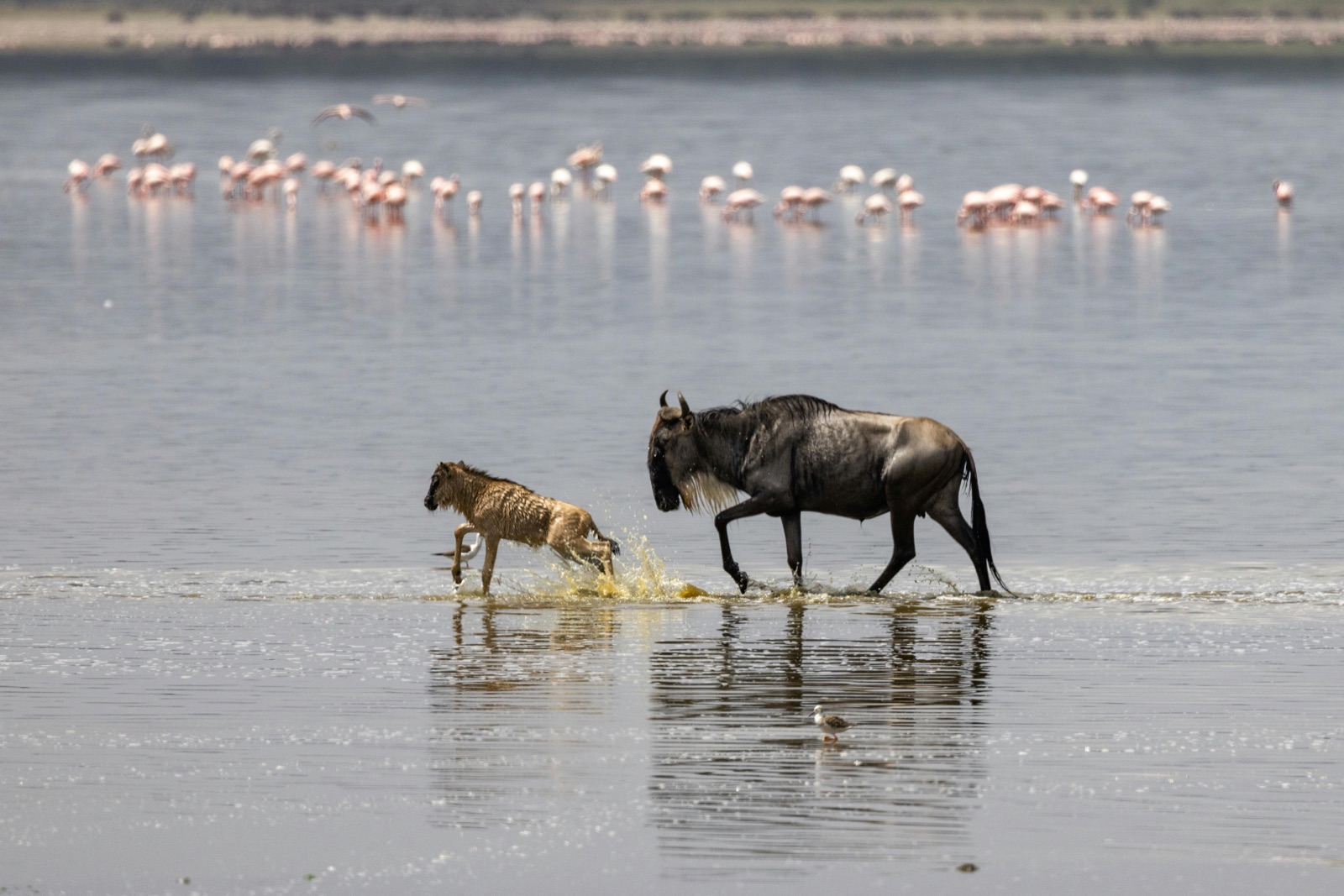
About Ndutu
Ndutu is not a national park. Geographically it sits at the southern edge of the Serengeti ecosystem; administratively it falls inside the Ngorongoro Conservation Area (NCA), governed by the Ngorongoro Conservation Area Authority. The boundary with Serengeti National Park runs through the broader Ndutu region. It is unfenced. Wildlife crosses freely. The wildebeest do not know which side they are on. Your guide does, because it determines what the vehicle can legally do.
In Serengeti National Park, off-road driving is forbidden for non-research vehicles. No exceptions. In Ndutu specifically, the NCAA has designated the area as an authorised off-road zone. This is a carve-out, not a general NCA rule: the rest of the conservation area, including the Ngorongoro Crater floor, prohibits off-road driving just as strictly as the national park does. When a cheetah accelerates toward a newborn calf through ankle-height grass at Ndutu, your guide can leave the track, position for the light, and stay with the hunt. Cross the boundary east into Serengeti National Park and the vehicle returns to the road, regardless of what is happening 30 metres away.
The calving itself is driven by soil chemistry. The October-December short rains deposit phosphorus and calcium into the volcanic short-grass plains around Lake Ndutu and Lake Masek. These are the exact nutrients lactating cows and developing calves need. Herds arrive by late December, first births begin in mid-January, and peak intensity runs through the first two to three weeks of February. The Greater Serengeti Conservation Society puts the total at more than 400,000 calves born in a few weeks, with the daily rate at peak reaching around 8,000 (a conventional figure, widely cited and plausible given the total, though not from a single peer-reviewed source). Calves stand within 3-5 minutes of birth, walk within 15, and run with the herd within hours. Predators do not wait.
The predator response to calving is the most important fact about Ndutu. Every lion pride in range pulls toward the calving grounds. Spotted hyena clans range 33-72 members. Cheetahs work the open short-grass plains where their sprint-hunting success rate runs near 50 percent during calving, compared to around 30 percent at other times. Black-backed jackals work directly on newborns, often a dozen around a single birth. The full cast operates simultaneously and in plain view. Kills happen before breakfast, through the morning, before sundowners. This is not the Mara River, where you wait for one event. At Ndutu in February, the event is continuous.
There is a second Ndutu that most visitors never see. From April through mid-December, the migration herds have moved north and the mobile camps have packed up. Ndutu Safari Lodge stays open year-round, and what remains is a resident predator community with no migration traffic: named cheetah coalitions with established territories around the Big Marsh and the Causeway, the Masek Pride whose lions climb acacia trees around Lake Masek (a behaviour normally associated with Lake Manyara), the Twin Hill lion pride whose cubs the guides track across seasons. Wildlife photographers who have visited in February come back off-season specifically for this. Fewer vehicles, familiar animals, different quality of encounter.
Wildlife in Ndutu
Wildebeest
1.5 million in the Serengeti-Mara ecosystem. More than 400,000 calves born in the Ndutu area over roughly six weeks, January through March.
Cheetah
Some of Africa's most photographable cheetah hunting on open short-grass plains with off-road vehicle positioning. Named resident coalitions hold territories around the Big Marsh year-round. Hunt success near 50% during calving.
Lion
Multiple prides converge on the calving grounds January-March. The Lake Masek Pride is documented tree-climbing in the acacia woodland around Lake Masek. Long Gully is the best location for coalition males at first light.
Spotted Hyena
Clan sizes of 33-72 members. Active hunters, not scavengers. Responsible for a large share of kills on the calving plains alongside the lion prides.
Leopard
Resident in the acacia woodland fringing Lake Masek. Less visible than in the Serengeti valley but present year-round.
Bat-Eared Fox
Abundant on the short-grass plains year-round, often overlooked. Resident alongside serval, civet, and caracal, the smaller predator portfolio that photographers return for in the off-season.
Named Locations Worth Knowing
Ndutu's guides work specific terrain features that repeat visitors and photographers return to deliberately. Knowing these before you arrive changes what you ask for.
Long Gully is a seasonal stream whose water surface produces reflection shots that have appeared in wildlife photography awards. Coalition males are regularly photographed crossing it at first light. The light hits the water before it hits the plain. Wildlife photographers name Long Gully more than any other single Ndutu location.
Hidden Valley is a water feature where local guides predict large herds come to drink late-morning. The setup: nervous antelope approaching water while predators are visible nearby. One visiting photographer described it as 'animals writing their own story on a blank page.' Less known than the main plains; less vehicle traffic.
The Big Marsh and the Causeway hold territories for Ndutu's resident cheetah coalitions year-round, not just during calving season. April through mid-December this is where you find cheetahs when the migration has gone north.
Lake Masek acacia woodland is afternoon leopard territory and the home range of the Masek Pride, the lion pride documented climbing trees seasonally, a behaviour associated with Lake Manyara elsewhere. Afternoons at Lake Masek for tree-climbing lions are a real, if underplanned, Ndutu experience.
Ndutu Safari Lodge's own grounds are documented wildlife habitat. The lodge has camera-trapped its property for over 25 years. Lions, leopards, and cheetahs walk past the dining room. This is not a selling point embellishment; it is in the lodge's own records.
Ndutu vs Mara River Crossings
This is the question most repeat visitors eventually ask, and most operators answer badly: 'both are amazing, go to whichever fits your dates.' That is not useful for someone making a real decision.
The Mara River crossings (July-October, northern Serengeti and Masai Mara) are the single most dramatic wildlife event in Africa. Wildebeest plunging into crocodile-infested water from steep banks, thousands at a time, under pressure from Nile crocodiles coming from below. Cinematic. Irreplaceable. The 2023 and 2024 peak crossing images that circulated globally all came from the Mara. If the crossing photograph is the goal, nothing at Ndutu competes with it.
For predator viewing specifically, Ndutu is better. Here is why. The Mara crossing is one event: animals enter the water, crocodiles attack, survivors climb out. Between crossings you wait, sometimes for hours, sometimes for a day with no crossing at all. Predator-prey interaction at the river is intense but short. Between events, the Mara is standard game viewing.
At Ndutu in February, the predator action is unrelenting across the full game-drive day. Kills before breakfast. Lions mid-morning. Cheetah hunts on open ground in usable light. Hyena clan activity through the afternoon. The herds are not moving; the predators do not need to range far. Add off-road positioning and you get more action, better angles, better framing, and a closer approach.
Every major wildlife photography operation that works both locations rates Ndutu above the Mara for predator photography. The Mara is better for spectacle. Ndutu is better for the photographs that result from watching a predator work. They are not competing for the same experience.
The Park Fee Calculation: What Operators Don't Tell You
Where your camp sits relative to the NCA-SNP boundary determines your daily park fee bill, and the difference is significant.
NCA conservation fee: USD 71 per person per day. Serengeti National Park entry fee: USD 83 per person per day. If your game drives cross from one jurisdiction into the other (which happens routinely near Ndutu, since the boundary is unfenced and the best calving terrain straddles it), you pay both: USD 154 per person per day.
Most operators absorb or include this in their package pricing without explanation. Some do not. Before booking, ask: which side of the NCA-SNP boundary is the camp on, and are daily game drives likely to cross into the other jurisdiction? If your operator cannot answer this specifically, they have not been to the camp.
Best Time to Visit Ndutu
| Months | Weather | Wildlife | Crowds |
|---|---|---|---|
| Dec 1-19 | Short rains ending. Plains greening. Herds arriving. | Early births beginning. Predator density building. Lemala Ndutu rates at $330/night, the lowest of the season. | Low |
| Dec 20 – Jan | Warm, dry interlude between rains. Ankle-height grass. | Calving underway, predator density rising. First serious action on the plains. | Moderate. Late January is the insider's window: near-peak wildlife, fewer vehicles than February. |
| Feb | Warm and generally dry. Best short-grass conditions. | Peak calving. Around 8,000 calves born per day at maximum. All major predators active simultaneously. The month most operators recommend. | High by Ndutu standards (still far below Mara August). Mid-February is the busiest window. Book 6-9 months out. |
| Mar | Long rains approaching. Tracks soften by late March. | Calving winding down. Herds beginning to move northwest. Early March still good; late March variable. | Low-Moderate. Good availability. |
| Apr-Nov | Long rains (Apr-May) then dry season. Mobile camps gone. | Ndutu Safari Lodge stays open year-round. Resident predators (named cheetah coalitions, Masek Pride, Twin Hill lions) without migration crowds. Off-season photographers rate this period highly. | Very low |
Common Questions
Is Ndutu in the Serengeti?
Geographically yes, ecologically yes. Administratively, no. Ndutu sits inside the Ngorongoro Conservation Area (NCA), governed by the NCAA, not Tanzania National Parks. It borders Serengeti National Park along an unfenced boundary. The distinction matters for two reasons: fees (NCA charges USD 71/day vs Serengeti's USD 83/day, and you may pay both if game drives cross) and driving rules (Ndutu is a designated off-road zone within the NCA; Serengeti National Park prohibits off-road driving with no exceptions for non-research vehicles).
When exactly is calving season and when is peak?
The meaningful window is late January through late February, with peak calving in the first two to three weeks of February. The Greater Serengeti Conservation Society documents more than 400,000 calves born in roughly six weeks each year, with daily rates at peak around 8,000. The exact start shifts by up to two weeks depending on the previous year's short rains. December is a genuine entry point with lower rates and fewer vehicles; early March is a quieter exit window with the herds still present. Late January is the insider's choice: near-peak wildlife, significantly fewer vehicles than peak February.
Is Ndutu better than the Mara River for predator viewing?
For predator viewing specifically, yes. The Mara River crossings (July-October) are the most dramatic single wildlife event in Africa and produce the defining migration photographs. But predator action at the river is intense and short. Between crossings you wait. At Ndutu in February, the predator activity is continuous through the full game-drive day: kills before breakfast, cheetah hunts on open ground in good light, hyena clan dynamics through the afternoon. Add off-road positioning, which Ndutu permits and the Mara National Reserve largely does not, and you get better angles on every encounter. Wildlife photographers who work both locations consistently rate Ndutu above the Mara for predator photography. They are different chapters of the same migration story.
What are the best camps at Ndutu?
Ndutu Safari Lodge is the original property, open year-round, with 34 stone-and-thatch cottages on Lake Ndutu. The lodge has been the base for professional wildlife photographers and filmmakers for decades. Mid-range pricing. Lemala Ndutu operates December 1 through March 31, nine luxury tents on a permanent marsh, with rates ranging from USD 330 per person per night in early December to USD 1,178 from December 20 through March. Asilia Olakira and Kimondo Migration Camp both operate mobile tented camps at Ndutu December-March, relocating to the northern Serengeti for July-October. February books out 6-9 months in advance at all properties.
How do you get to Ndutu?
By air from Arusha: Coastal Aviation, Auric Air, and Air Excel all serve Ndutu Airstrip during calving season. Flight time is approximately 1.5 hours (often via one or two intermediate airstrips). Pricing runs roughly USD 270-440 per person one-way depending on carrier. Coastal Aviation is the most frequently used; Auric Air is generally the lowest-priced option. By road from Arusha: approximately six to seven hours via Karatu and the Ngorongoro Conservation Area. Long but the route through the NCA highlands is scenic. Flying saves a full day each way.
Are there tsetse flies at Ndutu?
Ndutu is comparatively low for tsetse. The short-grass open plains habitat that defines the calving area is not prime tsetse territory (they favour denser bush and woodland). The western Serengeti corridor and parts of Tarangire are more tsetse-affected. Light-coloured clothing and standard insect repellent are adequate precautions at Ndutu. The main health consideration is malaria prophylaxis, which applies throughout Tanzania.
Can you visit Ndutu outside calving season?
Yes, and some photographers prefer it. Ndutu Safari Lodge is open year-round. From April through mid-December, the mobile camps have gone but the resident predators remain: named cheetah coalitions with established territories around the Big Marsh, the Lake Masek Pride (a lion pride known for seasonal tree-climbing), the Twin Hill lion pride. No migration traffic means fewer vehicles at every sighting. The off-season is a different experience from calving season but not a lesser one.
Can you combine Ndutu with the Ngorongoro Crater?
Yes, and it is the most natural combination from a routing perspective. Ndutu sits inside the NCA, roughly two hours by road from the crater rim. Our Calving Season Safari runs several days at Ndutu followed by a half-day crater descent before returning to Arusha. The crater holds its resident wildlife year-round regardless of the migration's position, so the combination works in any calving-season month.
Safari Itineraries Including Ndutu