Honeymoon Tanzania & Zanzibar
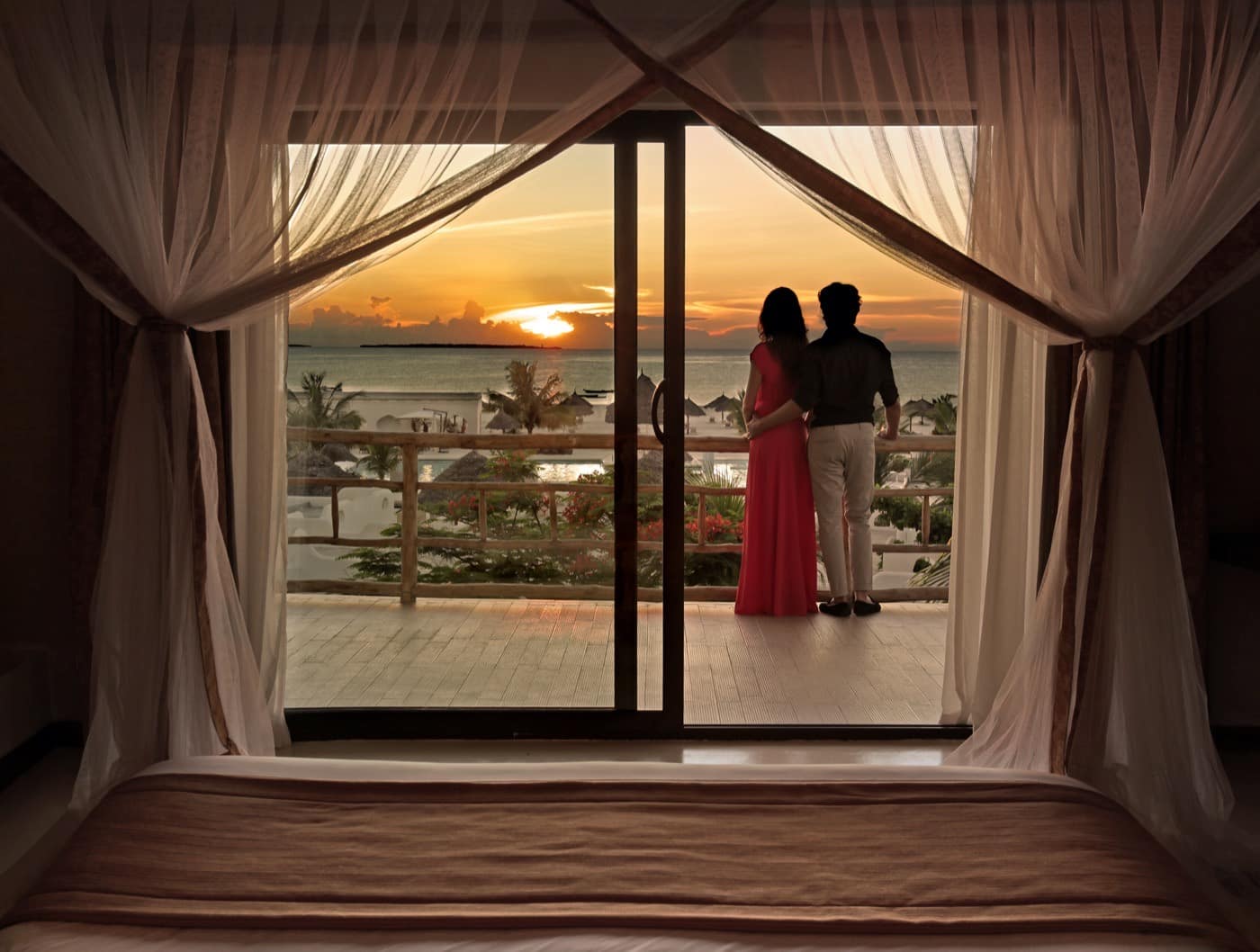
Seven days in the bush, four days at the coast. No two environments could be more different, and that contrast is exactly the point. You get Tanzania's full range: elephants in the Tarangire dust, lions on Serengeti kopjes, black rhino on the Ngorongoro crater floor, then white coral sand and an Indian Ocean the colour of a swimming pool. Private vehicle, private guide, just the two of you. From $5,245 per person for two travelling together, across the full eleven days.
Safari Overview
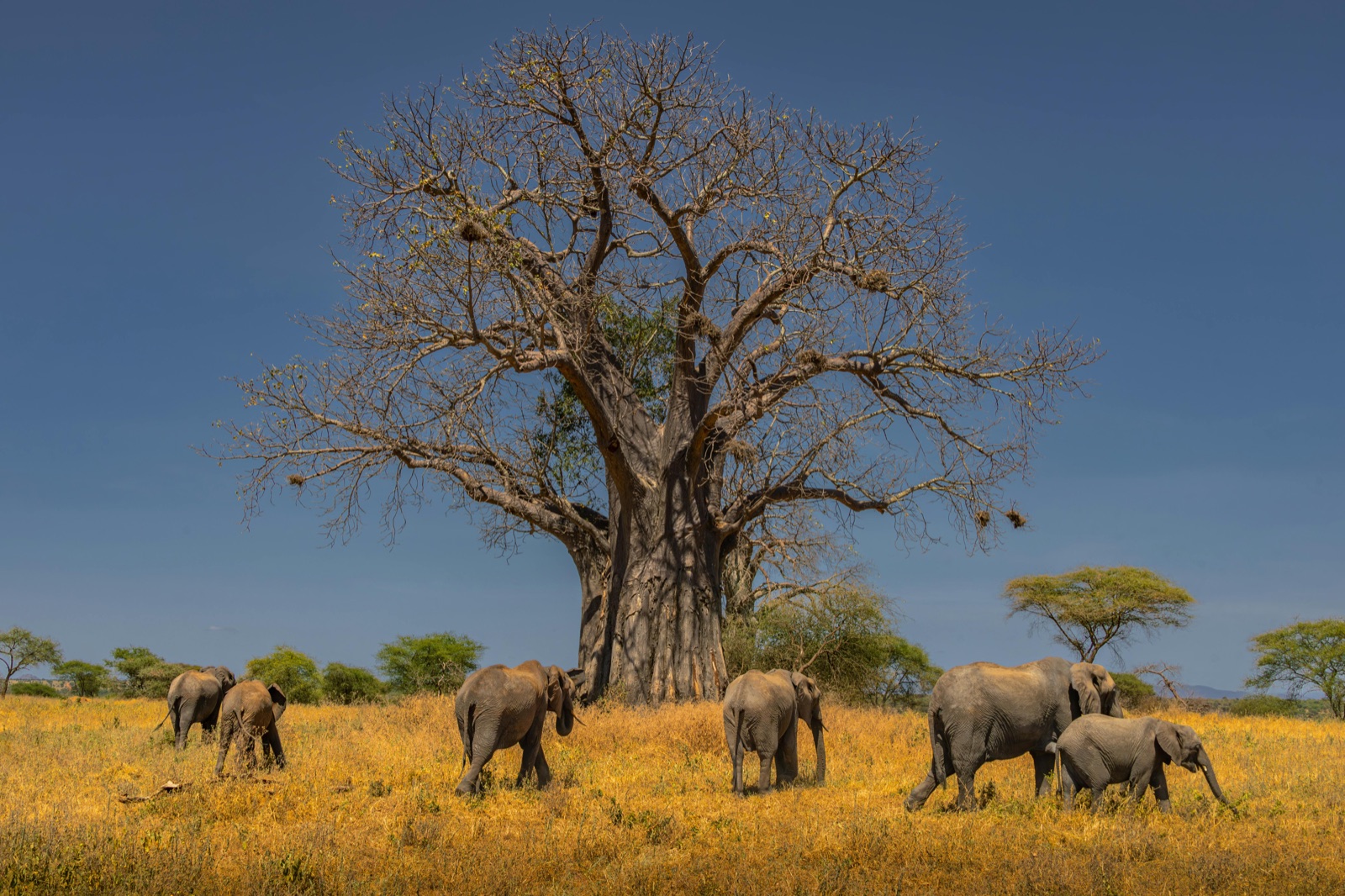
The route runs north to south through Tanzania's northern circuit before turning east to the coast. Arusha is your starting point. Day two takes you into Tarangire, where elephant density during the dry season is the highest of any park on the northern circuit, and the baobab trees are old enough that some predate the Roman Empire. Two nights there, then the six-hour drive west to the Serengeti through the Ngorongoro highlands, stopping at Olduvai Gorge on the way. Two nights in central Serengeti, tracking big cats across the Seronera Valley. Then east to the Ngorongoro Crater rim for two nights, with a full day on the crater floor: roughly 120 lions, 50 black rhino, and 15,000 wildebeest inside a 260-square-kilometre caldera they rarely leave. Day eight: drive to Arusha, then a Coastal Aviation flight to Zanzibar (about one hour forty-five minutes, included). Three nights at a beach property. The north coast has consistent swimming conditions year-round. The east coast (Paje, Bwejuu) is better for October through March when the Indian Ocean lies flat and snorkeling is clearest. We book whichever suits your travel dates. At each safari property, we arrange a honeymoon setup: champagne on arrival, private sundowner location, rose petals at turndown. At Ngorongoro, a private picnic lunch on the crater floor. On Zanzibar, a sunset dhow cruise from Stone Town harbour. None of this costs extra. What does: the hot air balloon over the Serengeti ($599 per person) and spa treatments in Zanzibar. The balloon, in particular, is worth it.
Your Itinerary
Activities
Pickup from Kilimanjaro International Airport or your connecting flight. The drive to central Arusha takes about 45 minutes on a clear day. Check in, rest, early dinner. We run through the route, confirm tomorrow's pickup time, and answer any last questions. The first game drive is in the morning.
Accommodation
Arusha Coffee Lodge or similar
Meals
Dinner
Prices
Green season (April–May)
| Tier | 2 guestsper person | 4 guestsper person | 6 guestsper person |
|---|---|---|---|
Premium Private safari camps with honeymoon touches and a beachfront resort on Zanzibar. Ang'ata Camps, Turaco Ngorongoro, Meliá Zanzibar | $5,245 | $4,455 | $4,195 |
Private safari camps with honeymoon touches and a beachfront resort on Zanzibar.
Ang'ata Camps, Turaco Ngorongoro, Meliá Zanzibar
- 2 guests (pp)
- $5,245
- 4 guests (pp)
- $4,455
- 6 guests (pp)
- $4,195
Peak season (June–October)
| Tier | 2 guestsper person | 4 guestsper person | 6 guestsper person |
|---|---|---|---|
Premium Private safari camps with honeymoon touches and a beachfront resort on Zanzibar. Ang'ata Camps, Turaco Ngorongoro, Meliá Zanzibar | $6,610 | $5,820 | $5,555 |
Luxury Premium safari camps with honeymoon touches and a private-pool beach villa. Lemala Camps, Safira Blu villas (Nungwi) | $8,395 | $7,605 | $7,345 |
Private safari camps with honeymoon touches and a beachfront resort on Zanzibar.
Ang'ata Camps, Turaco Ngorongoro, Meliá Zanzibar
- 2 guests (pp)
- $6,610
- 4 guests (pp)
- $5,820
- 6 guests (pp)
- $5,555
Premium safari camps with honeymoon touches and a private-pool beach villa.
Lemala Camps, Safira Blu villas (Nungwi)
- 2 guests (pp)
- $8,395
- 4 guests (pp)
- $7,605
- 6 guests (pp)
- $7,345
Per person sharing, US dollars. This trip is designed for two, so most couples book the 2-guest column; the 4 and 6-guest prices are for travelling with family or friends. The 'from' price is the Premium tier for two sharing in green season. The Luxury beach villas and camps close in April–May, so green season shows Premium only. Includes the Coastal Aviation flight to Zanzibar. Built from real lodge rates, our own vehicle, and current park fees, not marked-up reseller prices.
What Makes a Honeymoon Safari Different
A private vehicle means the schedule is yours. No shared departures, no waiting for strangers to finish photographing. You tell the guide when to stop, how long to stay, and when to head back. Lodge selection for couples is different from lodge selection for groups. The things that matter: room orientation (east-facing for morning light, west-facing for sunset), whether the property has plunge pools or open-air tubs, how private the dining is, and whether the lodge arranges setups without being asked. We book accordingly.
At each property on this route, we pre-arrange a honeymoon setup: champagne on arrival, a private sundowner location rather than the communal deck, rose petals at turndown. At Ngorongoro, a private picnic lunch on the crater floor. On Zanzibar, a sunset dhow cruise. If you want a private photographer for the balloon flight, the crater descent, or the Stone Town afternoon, we can arrange that at additional cost. Several couples have done this. The results are worth it.
Which Zanzibar Coast Is Right for You
Most itineraries say 'Zanzibar' without explaining that the island has five distinct coastlines with very different characters.
The northwest coast (Nungwi and Kendwa) is the most reliable for swimming. Deep water right off the beach means no tidal flats at low tide, and conditions are consistent whether you travel in July or January. Nungwi is livelier, with beach restaurants and a working fishing village at one end. Kendwa is quieter, with the same water conditions. Both face west for sunsets.
The northeast coast (Matemwe) is remote and adjacent to Mnemba Atoll, the best snorkelling on the island. The reef creates a shallow lagoon at low tide, however, so swimming conditions change significantly by the hour. Best for October through March.
The east coast (Paje, Jambiani, Bwejuu) is beautiful in the right months. October through March the Indian Ocean is calm and snorkelling is clearest. June through October, southeast trade winds turn Paje into a kitesurf beach. Most honeymoon couples prefer the northwest for June to October travel.
We book the right coast based on your dates. We do not default to one location regardless of timing.
Visas and Entry
Tanzania requires an eVisa for most nationalities, applied online at evisa.go.tz before departure. The fee is $50 for most passports; US citizens pay $100. Apply at least two weeks before you travel and print the approval letter to carry alongside your passport.
Yellow fever vaccination is required if you are arriving from a country on Tanzania's risk list, which includes most of sub-Saharan Africa and parts of South America. If you are transiting through Nairobi or Addis Ababa, confirm whether your specific layover duration triggers the requirement.
Zanzibar is part of Tanzania, so your mainland visa covers the island. You will fill in a short second immigration form on the Coastal Aviation flight. It takes about three minutes.
One practical note for newlyweds: if you have recently changed your surname and your passport still shows your maiden name, book all flights and accommodation in the maiden-name version. Mismatched passport and ticket names cause problems at check-in. If your passport is already in your married name, make sure your flight tickets match it exactly before you travel.
Getting Here: Flight Routing
There is no direct flight to Tanzania from North America, the UK, or most of Europe. Every routing involves one connection.
From the US East Coast: Qatar Airways (JFK or IAD via Doha) and KLM (JFK via Amsterdam) both serve Kilimanjaro International Airport with one stop. Turkish Airlines via Istanbul is frequently the cheapest option but adds flying time. Total travel time from New York is typically 18-22 hours.
From the UK: KLM via Amsterdam and Qatar via Doha are the most reliable. Emirates via Dubai is a popular premium option. British Airways connects via Nairobi with a domestic leg to Kilimanjaro.
From Australia: Singapore Airlines via Singapore and Emirates via Dubai both work. Expect 20-24 hours total.
Kilimanjaro International Airport (JRO) is the correct arrival airport for this itinerary. Do not fly into Dar es Salaam (DAR). It adds a full day of domestic travel to reach Arusha.
For the return, you depart from Zanzibar International (ZNZ). Most international connections route through Nairobi (NBO), Doha (DOH), or Dubai (DXB). Allow at least three hours for a connection in Nairobi, where the domestic-to-international transfer can be slow.
Wildlife by Month: When to Travel
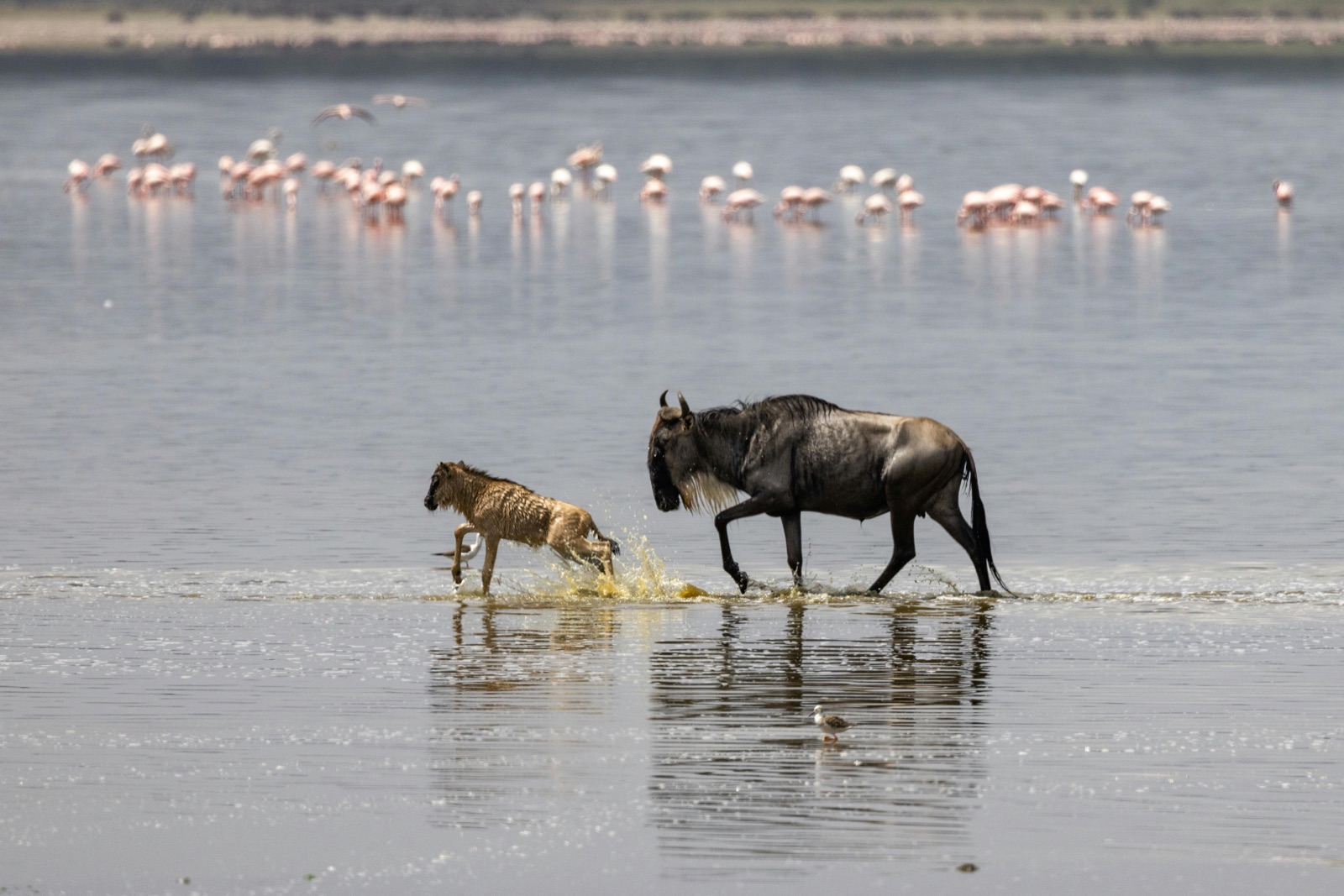
January and February: Calving season. The wildebeest herds are on the short-grass plains south of the Serengeti near Lake Ndutu, where roughly 8,000 calves are born per day at peak in early February. Every predator in the ecosystem converges on one area. Some wildlife photographers consider February Ndutu better for predator viewing than August Mara.
March: Calving winds down, herds begin moving northwest. Long rains approaching. A genuine shoulder option if you travel before mid-March.
April and May: Long rains. Lush landscapes, very few tourists, lower rates. Some roads become difficult and several Ndutu camps close. Not recommended.
June and July: Dry season begins. Animals concentrate around shrinking water sources. Western Corridor Serengeti, Grumeti River crossings from late June. Short grass, easy spotting.
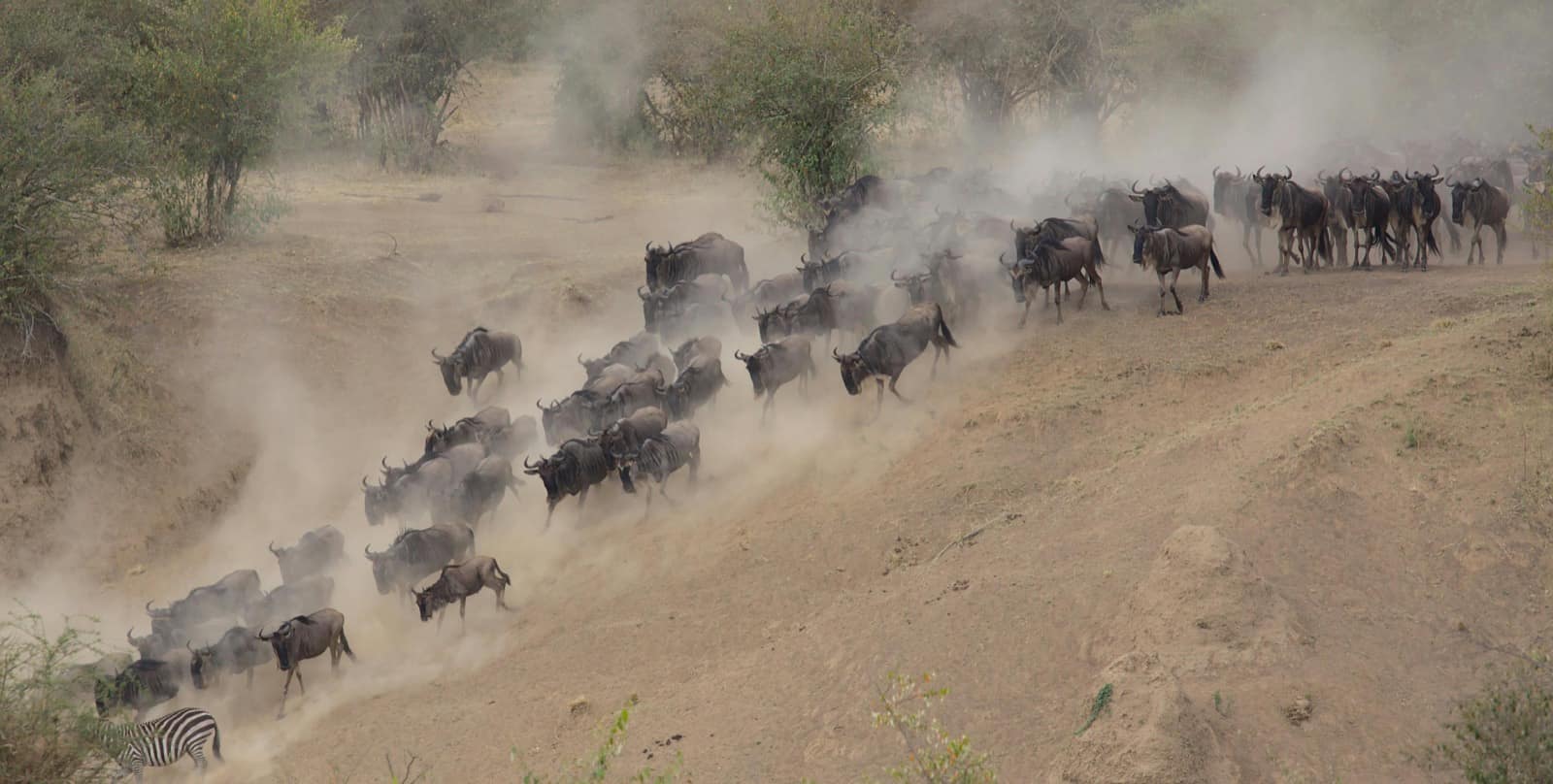
August through October: Peak season. Northern Serengeti, Mara River crossings at Kogatende. Highest prices and most dramatic crossings if you position correctly. Ngorongoro Crater is excellent year-round regardless of season.
November and December: Short rains, typically four to six weeks. Parks turn dramatically green, crowds thin, and rates drop. A genuine undervalued window that most operators overlook.
What to Pack
For the safari leg: neutral-coloured clothing in khaki, olive, tan, or grey. Bright colours disturb animals and attract insects. Mornings on the Serengeti are cold at 6:00am, so bring a fleece or light jacket. Afternoons reach 28-32°C. A wide-brim hat, polarised sunglasses, and SPF 50 sunscreen for open game drives. Binoculars make a real difference; 8x42 or 10x42 is the standard guide recommendation.
For Zanzibar: lightweight summer clothes. In Stone Town, modest dress is respectful away from the beach: covered shoulders and knees when walking through the market or along the seafront. Reef-safe sunscreen if you plan to snorkel at Mnemba Atoll, which has a coral protection policy. A waterproof bag for boat excursions.
Practical items: Tanzania uses Type G plugs (same as the UK). Bring a universal adapter if you are from North America, Europe, or Australia. A portable power bank is useful on long game-drive days. Take your antimalarial medication as prescribed and carry a small first-aid kit with antihistamine and rehydration sachets. Smart-casual evening wear for lodge dinners; no formal clothes required.
What's Included
Included
- All Tarangire, Serengeti, and Ngorongoro park and conservation fees
- Ngorongoro crater vehicle descent fee ($295 per vehicle)
- Private 4x4 Toyota Land Cruiser with pop-up roof for the safari leg
- Professional English-speaking guide, Arusha-based
- 7 nights safari accommodation (2 Tarangire, 2 Serengeti, 2 Ngorongoro) + 3 nights Zanzibar beach property
- Full-board on safari (all meals Days 1-8), half-board in Zanzibar (breakfast and dinner)
- Bottled water and soft drinks on game drives
- All road transfers on the safari circuit
- Coastal Aviation flight Arusha to Zanzibar (one-way per person)
- Sunset dhow cruise on Zanzibar (Day 9)
- Honeymoon setup at each property: champagne on arrival, private sundowners, private crater-floor picnic (Ngorongoro), rose petals at turndown
- AMREF Flying Doctors emergency evacuation insurance
Not Included
- International flights to and from Tanzania
- Tanzania e-visa ($50 for most nationalities)
- Travel insurance (required)
- Guide gratuity (suggested $25 per day for 7 safari days)
- Lodge staff gratuity (suggested $5-7 per day via tip box)
- Hot air balloon safari ($599 per person, optional, booked in advance)
- Spa treatments in Zanzibar
- Snorkeling excursions and optional activities in Zanzibar
- Alcoholic beverages beyond welcome champagne
Common Questions
When is the best time for this trip?
June through October is the cleanest window. Tanzania's dry season means short grass, animals concentrated around water, and easy spotting. Zanzibar's north coast swims well year-round regardless of season. January through March is the second-best option: calving season on the southern Serengeti plains, and Zanzibar's Indian Ocean is at its calmest and clearest. April and May are the months to avoid. The long rains make some safari roads genuinely difficult and many Zanzibar east-coast properties close for the season.
What makes this different from a regular Tanzania safari?
Everything runs privately. One vehicle, one guide, just the two of you. No shared departures, no waiting for other guests. You decide how long to stay at a sighting, when to return for lunch, and when the afternoon drive ends. Lodge selection for couples is also different: we prioritise rooms with a direct view, properties with plunge pools or open-air tubs, and intimate dining rather than communal tables. At each property, we pre-arrange champagne on arrival, a private sundowner location, and rose petals at turndown. These are confirmed in advance, not requested at check-in.
How many days should we spend on safari vs. Zanzibar?
Seven days on safari and four days at the coast is the standard, and it works. Tarangire, the Serengeti, and Ngorongoro are different enough ecosystems that seven days without repetition is realistic. Three full days in Zanzibar is enough to rest but not quite enough to feel the place. If the beach matters, extend to five or six nights. The most common extension is two additional Zanzibar nights. If wildlife is the priority, one or two extra nights in the Serengeti makes more difference than a longer beach leg.
Is the hot air balloon worth adding?
For a honeymoon, yes. The balloon operates out of the central Serengeti on Day 5. Departure is at 5:30am, the flight is about one hour over the plains, followed by a champagne bush breakfast on landing. Cost is $599 per person, paid directly to the balloon operator, booked in advance. It is the one add-on that genuinely changes what you see and how you remember the trip. I recommend it to every couple on this route.
How do we get from the safari circuit to Zanzibar?
Coastal Aviation operates a daily flight from Arusha to Zanzibar. It departs around midday and arrives roughly one hour and forty-five minutes later. The fare is approximately $250-300 per person one-way and is included in this package. There is no connection through Dar es Salaam. It is a direct route. We handle all booking and airport transfers on both ends.
Which part of Zanzibar is right for a honeymoon?
It depends on when you travel. The north coast (Nungwi, Kendwa) has consistent swimming conditions all year. The water does not drop shallow at low tide the way the east coast lagoons do. The east coast (Paje, Bwejuu, Jambiani) is quieter and more atmospheric, genuinely better for November through March when the Indian Ocean lies flat and clear. June through October, southeast trade winds turn the east coast into a kitesurf beach. We book the right coast based on your dates.
Are international flights included?
No. International flights are excluded from the package price. The starting price (from $5,245 per person for two sharing (Premium tier, green season)) covers everything from your arrival at Kilimanjaro International Airport (JRO) through to your departure from Zanzibar (ZNZ), including the domestic Coastal Aviation flight between the two. The most common international connections are via Doha (Qatar Airways), Amsterdam (KLM), Dubai (Emirates), or Istanbul (Turkish Airlines). Most nationalities also need a Tanzania eVisa before arrival, currently $50 per person ($100 for US citizens).
Do we need a visa for Tanzania and Zanzibar?
Tanzania requires an eVisa for most nationalities, applied online at evisa.go.tz. The fee is $50 for most passports; US citizens pay $100. Apply at least two weeks before departure and print the approval. Zanzibar is part of Tanzania. Your mainland visa covers the island, though you fill in a short second immigration form on the domestic flight. Yellow fever vaccination is required if you are arriving from a country on Tanzania's risk list. If you have recently changed your surname after getting married, book all flights in the passport-name version to avoid mismatched document problems at check-in.
What are the best honeymoon lodges for each park?
In Tarangire, Tarangire Treetops puts your room inside a 1,000-year-old baobab with a private plunge pool. In the Serengeti, the Four Seasons Safari Lodge has the most consistent infrastructure for couples (pool overlooking a waterhole, room-service game drives). For a tented camp experience, Asilia's Olakira or Nomad's Lamai Serengeti are better positioned for big cat sightings. At Ngorongoro, &Beyond Crater Lodge is the most iconic: butler service, 600m above the floor. In Zanzibar, Baraza Resort on the south coast and Kilindi on the northwest are the strongest at the top end. We build the right lodge combination for your budget.
Do we need malaria medication?
Yes. Zanzibar is a malaria zone, as are all of Tanzania's national parks. Consult a travel medicine doctor before you leave home. Antimalarial prophylaxis is standard advice for this trip regardless of nationality. The risk varies by season and location: lower in dry months, higher near the coast. Start your medication before you arrive in Tanzania. This applies to both legs of the trip.
Are tips included or extra?
Tips are excluded and handled separately. The standard in Tanzania is $20-25 per day for your driver-guide, paid directly on the last day of safari, and $5-7 per night for lodge staff via the envelope at reception. For this itinerary with one guide and seven safari nights, the total tipping budget is typically $150-175 for the guide and $35-50 for lodge staff, roughly $200-250 for a couple across the full safari leg. On Zanzibar, tipping is less formalised but the same courtesy applies.
What should we pack?
For the safari: neutral colours: khaki, olive, tan, grey. Bright colours disturb animals and attract insects. Mornings on the Serengeti are cold at 6:00am (bring a fleece); afternoons reach 28-32°C. A wide-brim hat, polarised sunglasses, SPF 50 sunscreen, and binoculars (8x42 or 10x42 recommended). For Zanzibar: light summer clothes. In Stone Town, covered shoulders and knees are respectful away from the beach. Reef-safe sunscreen for snorkelling at Mnemba Atoll. Tanzania uses Type G plugs (UK standard). Bring a universal adapter. Take antimalarial medication as prescribed. Smart-casual evening wear for lodge dinners; no need for formal clothes.
Can we extend the beach stay or adjust the itinerary?
Both. Most couples who extend add two or three nights in Zanzibar, making the beach leg a full week. On the safari side, accommodation upgrades are available at all three parks, including intimate tented camps that suit honeymoon travel better than large lodge properties. If you want fewer driving days or a different park combination, contact us with your dates and we will work out what fits.
You May Also Like