Tanzania Safari in August
August is the best month to safari in Tanzania. That is a position, and I will defend it. The Mara River crossings are at maximum frequency. The Tarangire elephant herds hit their annual peak, up to 500 individuals concentrated at the river. The Serengeti short-grass plains make every predator sighting effortless. Ngorongoro Crater is cold and clear. Everything is working at once. The price for this is the highest lodge rates of the year, the most vehicles at crossing points, and the least forgiving booking window on the continent. If you want August, you plan in October for it.
Plan an August Safari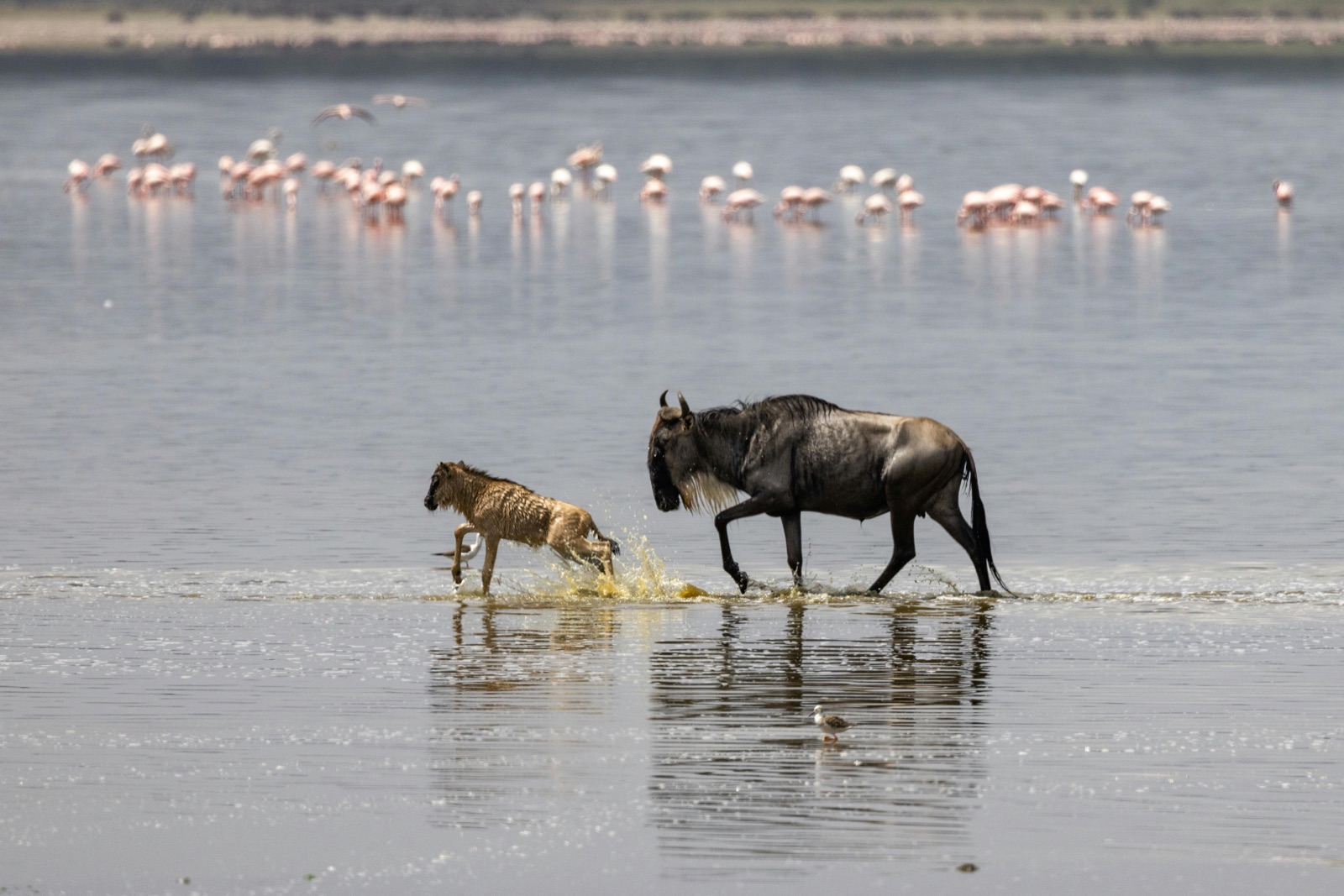
Wildlife Conditions in August by Park
Northern Serengeti (Kogatende/Lamai)
ExcellentPeak of the Great Migration. The Mara River crossing frequency in August exceeds any other month. Herd density on both banks is at its annual maximum. Multiple crossings per day at main sites, with lion, hyena, and crocodile all working the river. Lamai Wedge holds enormous concentrations of wildebeest between crossing attempts. The best single location for wildlife drama anywhere in Africa, in August.
Tarangire National Park
ExcellentAugust is Tarangire's peak month. The Tarangire River is the only water in the ecosystem and draws elephants from across the region. Concentrations of up to 500 individuals at the river are documented in August and September. Old bulls with tusks measuring over a metre. The park holds more than 3,000 elephants total; in August they come to the river in groups that exceed any other time of year. The baobab landscape in dry-season gold. No other month compares for elephants.
Ngorongoro Crater
ExcellentExcellent year-round and particularly strong in August. The crater floor is fully dry, concentrating animals at the Gorigor Swamp and Lerai Forest. Black rhino sightings at Gorigor are most frequent in the July–September window. Lion prides are active and visible on the open floor from early morning. The rim at 2,286m is cold at dawn (4–8°C). Descend wearing a fleece.
Central Serengeti (Seronera)
GoodResident predators are consistent year-round at Seronera. August is not where the migration is, but the big cats in the kopjes and along the Seronera River are reliable and accessible. Good fall-back if northern Serengeti lodges are full. Far fewer vehicles than the north in August.
Ndutu / Southern Serengeti
FairThe calving season herds left in March. Resident wildlife remains but this is the quietest zone in August. Not the right choice. Return in January.
Week-by-Week — August in the Field
| Week | What's Happening | Best Location |
|---|---|---|
| August 1–7 | Continuation of the July crossing momentum. Herd density at the Mara River banks is at its highest point of the year. Multiple crossing attempts per day at Kogatende main site. Some herds push into Kenya and return, others stay on the Tanzania side before committing. Predator ambush at river banks is constant. | Northern Serengeti, Kogatende and Sand River crossings |
| August 8–14 | The middle two weeks of August are historically the highest-intensity crossing period. Herd sizes are maximum. Animals are funnelling toward the river from the central Serengeti in waves. The Lamai Wedge holds 50,000+ wildebeest between crossings. Cheetah and leopard sightings peak on the Lamai Wedge where the prey concentration is highest. | Northern Serengeti (Lamai Wedge and Kogatende) |
| August 15–21 | Crossings continue with sustained intensity. Some herds are now north of the Mara River in Kenya's Masai Mara. They cross back and forth repeatedly. Vehicles at main crossing points are at their highest concentration of the year. Guides who know secondary crossings 3–5km downstream have a significant positioning advantage. | Northern Serengeti, secondary crossings north of main site |
| August 22–31 | Crossings continue through the end of August. The very end of the month sees some herds beginning a slow drift southward, but August finishes strong. September maintains similar patterns. No hard cutoff in the migration. | Northern Serengeti (still), Tarangire for elephants in parallel |
Weather in August by Location
| Location | Temperature | Rainfall | Notes |
|---|---|---|---|
| Ngorongoro Crater Rim (2,286m) | Near-freezing to 2°C morning / 18°C midday | ~5mm | August is the coldest month on the rim. Frost is common at dawn. Snow has been recorded. A proper down or fleece jacket, hat, and windproof layer are not optional. |
| Central Serengeti (Seronera) | 14°C morning / 25°C afternoon | ~5mm | Warm afternoons, cold mornings. Virtually no rain. Dust increases as the dry season extends. |
| Northern Serengeti (Kogatende) | 14°C morning / 26°C afternoon | ~5mm | Slightly warmer than central Serengeti. Afternoon wind off the Mara escarpment makes open-roof driving cold in the early hours. |
| Tarangire | 14°C morning / 24°C afternoon | ~5mm | Warm and completely dry. Dust on game drive tracks is significant in August. Bring a dust bag for camera gear. |
| Arusha | 11°C morning / 25°C afternoon | ~15mm | Pleasant highland city climate. Cooler than the parks. |
The Mara River in August: Honest Expectations
The Mara River crossings in August are everything the documentaries show, and they come with a context that matters.
The northern Serengeti sees up to 600 vehicles per day across its 4,000 square kilometres during August peak. At the active crossing points, congestion is severe enough that TANAPA deployed dedicated patrol vehicles in 2024 specifically to manage Kogatende. The crossing points are numbered 1 to 10. Numbers 4, 7, and 10 are the most visited. When a herd commits to the river, every guide within radio range drives to the nearest numbered site.
None of this is a reason not to go. It is a reason to choose your guide and your camp carefully. A guide who knows the northern Serengeti tracks the herd's position from the evening before, identifies which bank section the animals are testing, and arrives at one of the lesser-visited crossing points before the vehicle concentration assembles. Less volume in the river, fewer vehicles in frame.
Camp position matters more in August than in any other month. Lamai and the north-bank fly-camps have a structural advantage: they approach crossing points from the north side, which means fewer vehicles between camp and the action, and shorter drive times. South-bank lodges drive an extra 30–45 minutes and typically arrive after the north-bank camps.
For travellers who want August wildlife without the Mara crowds: Tarangire. The elephant herds peak in August, vehicle density is a fraction of the north, and the photography conditions (dry-season gold light, baobab backdrop) are superior for most subjects.
August Booking Reality
August is the hardest month to book in Tanzania. Not difficult, hard.
Northern Serengeti fly-camps (Asilia Sayari, Nomad Lamai, Olakira Migration Camp, Serengeti Safari Camp, Lemala Kuria Hills): 10–12 months minimum. The best-positioned north-bank camps have 8–12 tents. August allocations fill by September or October the prior year for the top weeks. This is not marketing urgency, it is inventory mathematics.
Mid-range northern Serengeti lodges (Serengeti Bushtops, Serengeti Sopa, Serengeti Serena): 7–9 months for August. Larger properties with more rooms, but August occupancy runs 95–100% at all of them.
Ngorongoro rim (Ngorongoro Serena, andBeyond Crater Lodge, The Highlands, Rhino Lodge): 6–8 months. Often overlooked by travellers fixated on the migration. August at the crater is outstanding and has better availability than the north.
Tarangire (Tarangire Treetops, Swala Camp, Oliver's Camp, Sanctuary Swala): 5–7 months. The best value month in Tanzania for serious wildlife. Availability is more forgiving than the north because fewer travellers prioritise it.
If you are reading this within 3 months of an August departure, contact us now. We can work with remaining inventory across the northern circuit, but options at this stage require flexibility.
August vs July: Which Is Better
The honest answer is August by a margin for the migration, and equal for everything else.
July has the first crossings of the season, which carry a particular energy. The wildebeest are crossing for the first time after months on the southern plains. August has higher crossing frequency because the herds are more established at the river and have memorised the approach routes. More crossings per day in August than July is the consistent pattern.
For elephants in Tarangire, August is also the stronger month. The herds continue building from their July numbers and peak in late August through September.
For cost and availability, July is slightly more forgiving than August. A lodge that was full for August peak week may still have one or two nights available in the first week of July.
If you can only do one month, August. If you can do both, do not.
August Itineraries
8-Day August Migration Safari
From $4,200 pp8 Days / 7 Nights
Tarangire · Central Serengeti · Northern Serengeti · Ngorongoro
Two nights in Tarangire for peak elephant herds. Two nights central Serengeti for predators and positioning. Two nights northern Serengeti at Kogatende for Mara crossings. One night Ngorongoro rim. The full August circuit, in sequence.
View Full Itinerary5-Day Tarangire & Ngorongoro
From $2,300 pp5 Days / 4 Nights
Tarangire · Ngorongoro Crater
For travellers who cannot get northern Serengeti availability in August, or who want the migration-free version. Tarangire in August is exceptional for elephants. Ngorongoro Crater is exceptional in any month. Both together is a strong alternative circuit.
Get a QuoteCommon Questions — Tanzania Safari in August
Is August the best month for a Tanzania safari?
For the Mara River crossings and the Great Migration, yes. August has the highest crossing frequency and herd density of any month at the Mara River. Tarangire elephant herds also peak in August. The tradeoff is the highest lodge rates and least booking availability of the year. If you can plan 10–12 months ahead, August delivers the most consistent high-intensity wildlife viewing of any month on the northern circuit.
Where is the wildebeest migration in August?
In August, the main wildebeest herds are at the Mara River in the northern Serengeti, crossing back and forth between Tanzania and Kenya's Masai Mara. The Kogatende area and Lamai Wedge hold the highest concentrations. The western Serengeti still has some herds. The southern Serengeti and Ndutu are quiet in August. If your goal is the migration, the northern Serengeti is the only option in August.
How far in advance should I book an August safari?
10–12 months for the best northern Serengeti fly-camps. 7–9 months for mid-range northern Serengeti lodges. 5–7 months for Tarangire and Ngorongoro. If you are less than 3 months out from an August departure, contact us immediately. Remaining inventory at this stage is limited and requires flexibility on camp choice.
How much does an August safari cost compared to other months?
August is the most expensive month. Lodge rates are at their annual peak, typically 20–40% above shoulder season (January–March, November–December). A private 8-day mid-range August safari for two people runs $8,400–$12,000 total, compared to $6,400–$9,600 in a shoulder month. The crossing frequency and wildlife conditions justify the premium for most travellers who specifically want the migration.
What should I pack for an August Tanzania safari?
A proper fleece or light down jacket is non-negotiable, especially for Ngorongoro and any early morning drive. The crater rim at 4–8°C before a descent is cold. Neutral colours for game drives: khaki, olive, tan, grey. A windproof layer for open-roof vehicles. Dust bags for camera equipment, August is the dustiest month on the Serengeti tracks. Binoculars 8x42 minimum. Sunscreen SPF 50+ for afternoon drives. Bring more memory cards than you think you need.
Is August crowded at the Mara River?
Yes, significantly. The northern Serengeti sees up to 600 vehicles per day in August across its 4,000 km². At active crossing points the congestion is severe enough that TANAPA deployed dedicated patrol vehicles to manage it in 2024. The mitigation is guide quality and camp position: a guide who knows lesser-visited crossing points and a camp on the north bank of the Mara arrive before the main vehicle concentration assembles. Tarangire in August has outstanding elephant herds and a fraction of the vehicle numbers.
Which parks are best for a Tanzania safari in August?
Northern Serengeti for the Mara River crossings. Tarangire for elephant herds at annual peak. Ngorongoro Crater for Big Five concentration and black rhino. Central Serengeti for resident predators if northern availability is gone. The southern Serengeti and Ndutu are not the right choice in August.