Tanzania Safari in February
Around half a million wildebeest calves are born on the southern Serengeti plains in a window of a few weeks, and February is the heart of it. Predator activity hits its annual maximum. Lions gorge. Cheetah hunting success roughly doubles on the open ground. A hyena clan at Ndutu has been reported at over 80 members. This is the strongest single wildlife event on the Tanzania calendar that most first-time visitors have never heard of, because the marketing money all points at the July river crossings. Repeat safari travellers often rate calving higher. They are not wrong.
Plan a February Safari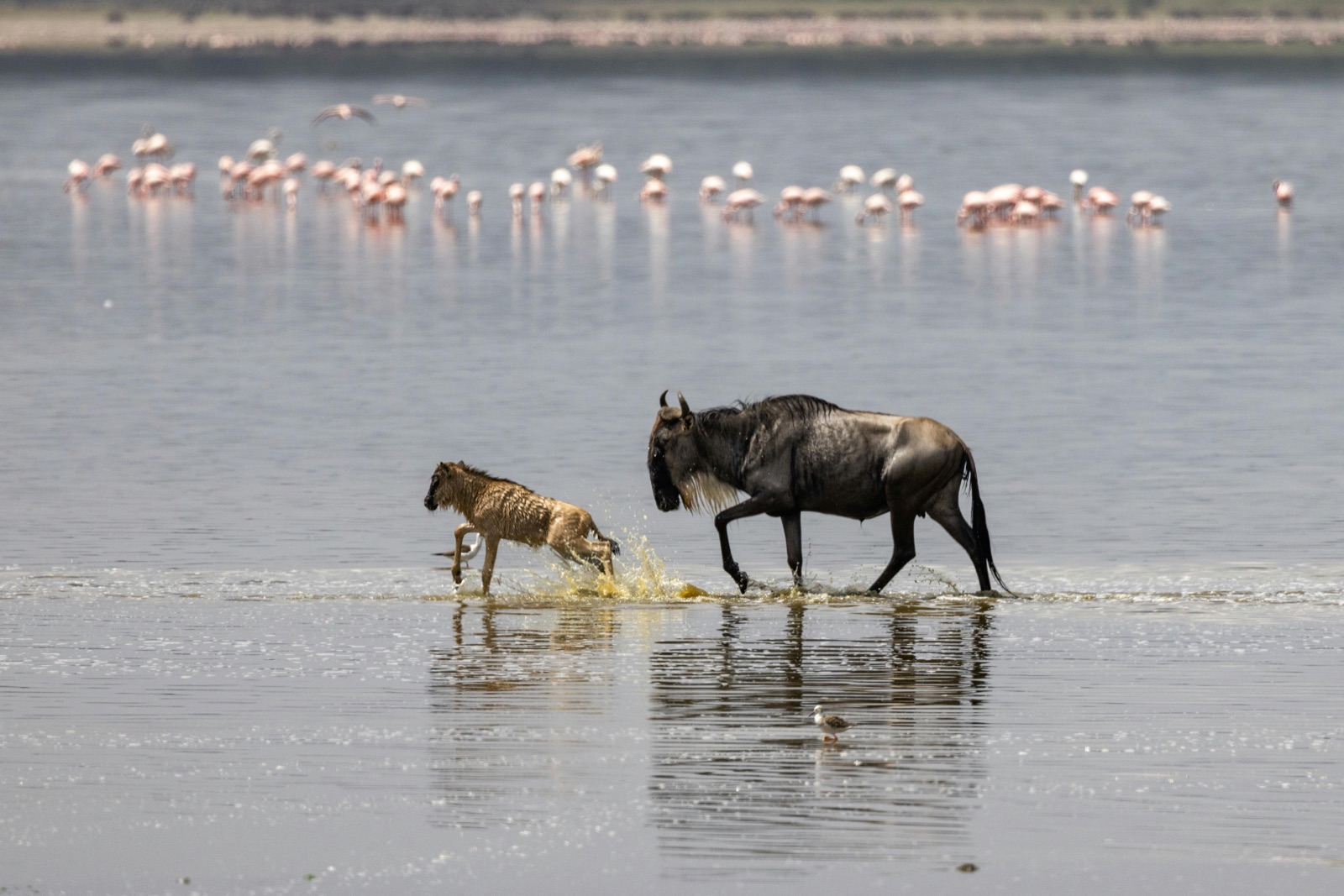
Wildlife Conditions in February by Park
Ndutu / Southern Serengeti
ExcellentPeak calving across Ndutu, Lake Masek, and Hidden Valley, with up to 8,000 births on the biggest days and the highest predator density of the year. Off-road driving means your guide positions at the action. Camps run at capacity; this is the longest-lead booking month of the calendar.
Ngorongoro Crater
ExcellentCalving inside the caldera as well, with predator-prey interaction at its annual peak on the crater floor, plus the resident black rhino. High-season congestion on the floor. An early descent matters even more than usual.
Central Serengeti (Seronera)
GoodReliable resident big cats and far fewer vehicles than the south. Worth a night or two on longer February routes for leopard along the Seronera River.
Lake Manyara
GoodAccessible resident game and strong birding with the migrants settled in. Crowds ease through the month.
Tarangire National Park
FairGreen-season dispersal continues. Elephants present in lower numbers, birding strong. Not the month for Tarangire.
Week-by-Week: February in the Field
| Week | What's Happening | Best Location |
|---|---|---|
| February 1-7 | Peak calving continues from the late-January pulse with maximum daily births. The plains are dense with herds, calves, and the predators following them. | Ndutu / Kusini plains |
| February 8-14 | Still peak, and statistically the single best predator window of the year. Also Ndutu's busiest week. Off-road access keeps sightings workable. | Ndutu |
| February 15-21 | Birth rate tapering slightly. The earliest calves are now running with the herds, which changes the predation pattern from ambush to chase. | Ndutu / Hidden Valley |
| February 22-28 | Calving tapers and the herds begin a slow westward spread. Still excellent, with pre-rut tension starting among the bulls. | Ndutu toward Kusini |
Weather in February by Location
| Location | Temperature | Rainfall | Notes |
|---|---|---|---|
| Arusha | 11°C morning / 29°C afternoon | ~54-84mm over ~10-13 days | The warmest month. Short rains mostly over, afternoon storms possible. |
| Central Serengeti (Seronera) | 15°C morning / 28°C afternoon | ~100mm over ~13 days | Very green. Showers pass quickly and rarely cost game-drive time. |
| Ngorongoro Crater Rim | 12-17°C dawn / 29°C midday | ~54mm over ~13 days | Warmer and drier than January with good visibility into the caldera |
| Zanzibar | 24°C night / 33°C day | ~66mm over ~5 days | The hottest, sunniest month on the coast. Fewest rain days of the year. |
Calving vs the River Crossings: An Honest Comparison
The Mara River crossings in July to September are the famous event: explosive, concentrated, over in minutes, and watched by a queue of vehicles. Calving is the opposite shape. It is sustained predator drama spread across days, viewed off-road, often with a handful of vehicles or none at all.
A newborn wildebeest cannot run properly for its first few minutes of life, and the predators of the southern plains have built their whole calendar around that fact. You will see hunts in February. Not might. Will. Repeat safari travellers consistently rate calving above the crossings for exactly this reason, while first-timers chasing one famous moment usually pick the river. Both are right. But if you want sustained, close, off-road predator viewing rather than a single spectacular event with an audience, February is the better trip.
Booking Lead Time, Ramadan, and the Zanzibar Question
February is the longest-lead month on the Tanzania calendar. The good Ndutu camps are small, the season is short, and everyone who knows about calving aims at the February 5 to 15 peak. Book 6 to 9 months ahead. If you are inside that window, January offers the same calving grounds with materially better availability.
Two notes for the back half of the month. Ramadan 2027 begins around February 18. Mainland safari operations are unaffected, and for Muslim travellers we run Ramadan-specific itineraries with suhoor and iftar built around the drives. For Zanzibar beach extensions in late February, expect a quieter restaurant and bar scene in Stone Town during the fast. And in any February, the Sauti za Busara music festival in Stone Town is worth planning a beach leg around: four nights of live music across East Africa's best festival venue, inside the old fort.
February Itineraries
Calving Season Safari
From $2,600 pp7 Days / 6 Nights
Ndutu · Ngorongoro
Built for exactly this month: based at Ndutu through the peak calving window with off-road access, plus a full crater day. Book 6 to 9 months ahead for February.
View Full ItineraryHoneymoon Tanzania & Zanzibar
From $5,245 pp11 Days / 10 Nights
Tarangire · Serengeti · Ngorongoro · Zanzibar
February is the warmest, driest month on the Zanzibar coast, which makes it the strongest month of the year for the safari-plus-beach honeymoon.
View Full ItineraryCommon Questions: Tanzania Safari in February
Is February the best month for a Tanzania safari?
For the calving event, yes. Roughly 500,000 calves are born in a few weeks at Ndutu, predator activity is the highest of the year, and the weather is warm and mostly dry. The peak intensity runs February 5 to 15. The trade-off is demand: the good camps book out 6 to 9 months ahead. January offers the same grounds slightly earlier with better availability.
Where are the wildebeest in February?
Massed on the short-grass plains of Ndutu in the Ngorongoro Conservation Area and the adjacent southern Serengeti, at their maximum spread of the year. Base inside the NCA at Ndutu for off-road access to the births and hunts. There are no river crossings in February.
Calving season or the Mara crossings: which should I choose?
They are different trips. The crossings are explosive single events with big crowds; calving is sustained predator drama viewed off-road over days. First-timers who want the famous documentary moment usually choose the crossings in July to September. Repeat travellers and photographers usually rate calving higher. If close predator action matters more to you than a single iconic scene, choose February.
Is Ndutu too crowded in February?
It is Tanzania's busiest area this month, but the plains are vast and off-road driving disperses vehicles in a way fixed tracks never can. It rarely feels like the August Mara River queues. For noticeably fewer vehicles on the same calving grounds, travel in early-to-mid January instead.
What is the weather like in February?
Warm and mostly dry. Serengeti highs around 28°C, Arusha at its warmest, and the coast up to 33°C with the fewest rain days of the year. Brief afternoon showers happen inland and rarely disrupt morning drives. Bring light layers for cool dawns on the crater rim.
How far ahead should I book a February safari?
Six to nine months for the good Ndutu camps, and longer for the February 5 to 15 peak window. Camp position relative to the herds is the main driver of trip quality in calving season, so booking early is not about price, it is about being based where the action is.
Does Ramadan affect a February 2027 safari?
Ramadan 2027 begins around February 18. Mainland safari operations are unaffected. For Muslim travellers, we run halal itineraries with suhoor before dawn drives and iftar in the bush. For Zanzibar extensions after February 18, expect a quieter restaurant scene in Stone Town during fasting hours; resort dining is largely unaffected.