Tanzania Safari in June
Everyone knows the Mara River crossings. Almost nobody books the Grumeti. In June the herds mass on the Grumeti's south bank in the Western Corridor, the crocodiles that have waited a year stir in the pools, and the first crossings of the season happen in front of one, two, maybe three vehicles. The dry season is establishing, the grass is shortening, every park on the circuit is improving by the week, and the full July price peak has not landed yet. June is the connoisseur's opening move.
Plan a June Safari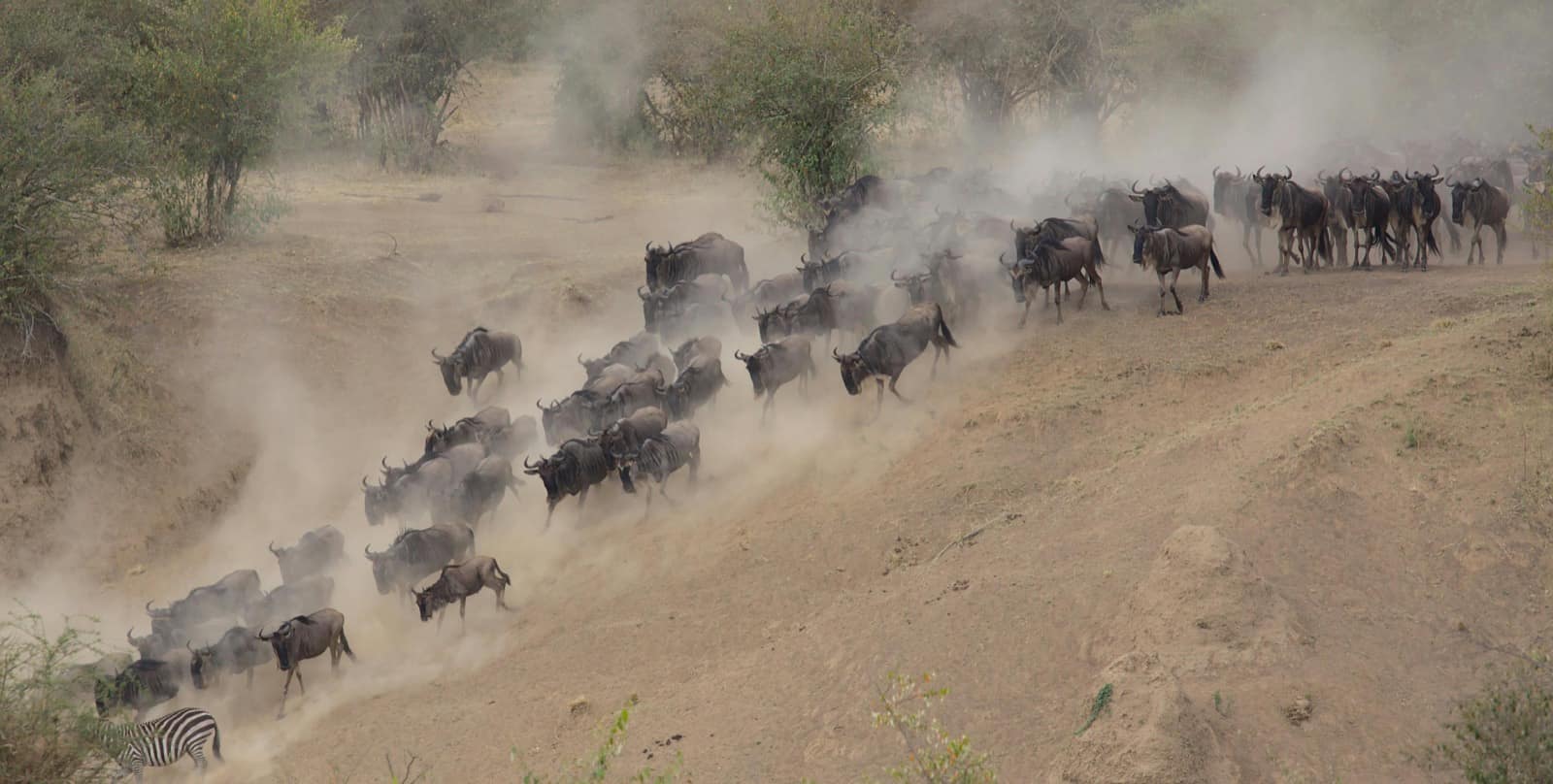
Wildlife Conditions in June by Park
Serengeti: Western Corridor / Grumeti
ExcellentThe herds bunch at the Grumeti through the first half of the month, with the main crossing activity usually in weeks two and three. Crocodile ambushes at the pools, lion and leopard in the riverine woodland. In a dry year, advance herds push toward Lobo by late June. Far fewer vehicles than the Mara will see in August.
Ngorongoro Crater
ExcellentDry season on the crater floor: short grass, maximum visibility, lions in the open, and the resident black rhino. Cold mornings on the rim. Crowds build toward the July peak but June stays workable.
Lake Manyara
ExcellentThinning vegetation makes spotting easy, the flamingos are on the lake, and this is the start of the best window for the park's famous tree-climbing lions.
Tarangire National Park
GoodThe dry season pull begins: elephants and plains game start concentrating along the Tarangire River. Good now, exceptional by August.
Ndutu / Southern Serengeti
GoodMigration long gone. Resident game on drying plains and far fewer vehicles than anywhere else on the circuit. Camps reopening.
Week-by-Week: June in the Field
| Week | What's Happening | Best Location |
|---|---|---|
| June 1-7 | Herds building on the Grumeti south bank, early crossings beginning, the rut winding down. High-season rates start at most camps on the 1st. | Western Corridor / Grumeti |
| June 8-14 | The main Grumeti crossing window opens in a normal year. Crocodile activity at its peak in the pools. | Grumeti River |
| June 15-21 | Herds clearing the river and pushing north. Crossings continue at multiple points along the channels. | Grumeti, then toward Lobo |
| June 22-30 | Dry year: advance herds near Lobo and the northern approaches. Wet year: still crossing the Grumeti. The year-to-year swing is wide; June rewards flexible routing. | Lobo / northern approaches |
Weather in June by Location
| Location | Temperature | Rainfall | Notes |
|---|---|---|---|
| Arusha | 9°C morning / 21°C afternoon | ~8-33mm over ~3-5 days | Dry season established. Clear air, cool nights, dust building. |
| Central Serengeti (Seronera) | 13°C morning / 25°C afternoon | ~23mm over ~7 days | Drying fast, excellent visibility, classic dry-season conditions |
| Ngorongoro Crater Rim | 8-12°C dawn / 24°C midday | ~7mm over ~6 days | Cold dawns and morning mist on the crater floor, clear afternoons |
| Zanzibar | 23°C night / 28°C day | ~53mm over ~7 days | Sunny and cooler with the kusi trade winds. East-coast seas can be rough. |
The Grumeti Is Not the Mara, and That Is the Point
An honest expectation-setting note, because this is where June bookings go wrong. The Grumeti is not a single wide river like the Mara; it is a chain of pools and channels through riverine forest. Crossings are shorter, less continuous, and sometimes viewed at a distance. If you have built your mental image from documentary footage of wildebeest pouring down the Mara banks in their thousands, the Grumeti will read as a smaller event.
What the Grumeti offers instead is intimacy. A June crossing might have one to three vehicles present. The same event at the Mara in August has six to eight, and the famous crossing points can stack twenty or more. The crocodiles here are enormous, having waited most of a year for this fortnight. And the rut is still rumbling through the same herds at the same bottleneck, which means fighting bulls and distracted animals at the water's edge. Plan a minimum of four nights in the Western Corridor to give yourself a real chance at a crossing, and treat anything you see as a bonus on top of an already-excellent dry-season safari.
June Pricing: The Step Before the Peak
June 1 is the big rate switch: most camps move from green-season to high-season pricing, and the major northern camps reopen the same week. But a number of properties hold June at a mid-season rate below their full July-August peak, on the logic that the Mara crossings have not started and demand follows the Mara. The gap can be substantial at the premium end.
The practical play: if you want dry-season conditions and a genuine crossing chance at less than peak pricing, June is the month, and early June especially, when a few camps still honour shoulder rates booked late. By July 1 everything is at full peak and stays there into October. Book June 9 to 12 months out for the good Western Corridor camps; there are not many of them and the photographers know the secret.
June Itineraries
Great Migration Safari
From $4,445 pp10 Days / 9 Nights
Northern Serengeti · Serengeti · Ngorongoro
In June this route weights the Serengeti nights west toward the Grumeti, then repositions north as the herds move. Built around where the animals actually are.
View Full Itinerary8-Day Classic Tanzania Safari
From $2,355 pp8 Days / 7 Nights
Tarangire · Serengeti · Ngorongoro
The classic circuit in improving dry-season conditions: concentrating game, clear skies, and every park on the upswing.
View Full ItineraryCommon Questions: Tanzania Safari in June
Is June good for seeing the migration?
Yes. June is the Grumeti River month: the herds mass on the south bank in the Western Corridor and the first crossings of the season happen, usually peaking mid-to-late month. It is less famous than the Mara and more intimate, with one to three vehicles at a crossing instead of the August queue, and crocodiles that have waited a year for the herds.
June versus July or August: which should I pick?
June buys you dry-season conditions and crossing drama with far fewer vehicles, at rates that have not all reached full peak. July and August buy the bigger, more famous Mara crossings with bigger crowds and the year's highest prices. If you want the spectacle at maximum scale, go July or August. If you want crossings with breathing room, go June.
Where should I stay for a June safari?
Western Corridor camps for Grumeti access, paired with central Serengeti for the resident big cats. In late June, especially in a dry year, it is worth splitting toward Lobo in the north as the advance herds arrive. We build June routes with repositioning flexibility, because the herds can be a week early or a week late.
Can I see a Grumeti crossing on a short safari?
Possible but not bankable. Crossings happen in short bursts on no fixed schedule. Plan a minimum of four nights in the Western Corridor to give yourself realistic odds, and treat the crossing as the bonus on top of a dry-season safari that is already excellent without it. A private vehicle with radio contact across the guide network improves your chances considerably.
What is the weather like in June?
The dry season proper: clear skies, afternoon highs around 24 to 27°C, cold mornings of 8 to 13°C inland, and almost no rain. Bring a real jacket for dawn drives, especially on the Ngorongoro rim, where first light can be close to freezing in an open vehicle.
Is June peak season pricing?
Mostly. High-season rates start June 1 at the majority of camps, and the big northern properties reopen the same week. Some camps hold June at a mid-season rate below their full July-August peak, which makes early June the last value gap before everything tops out on July 1. Our 8-day Classic starts from $2,355 per person; book 9 to 12 months out for the best Western Corridor camps.
What else is good in June besides the Grumeti?
Everything is improving at once. Lions and leopards stand out on the shortening grass, Tarangire's elephants are concentrating along the river, Lake Manyara's tree-climbing lions enter their most reliable window, and the Ngorongoro Crater floor is dry, clear, and full. June is the month the whole circuit wakes up.