Tanzania Safari in October
Here is the October secret: the first ten days are a genuine sleeper window for Mara crossings. The herds have not read the brochures saying the season ends in September, and they keep working the river while they remain north. Meanwhile Tarangire hits its single best month, with the highest riverine elephant density in Africa, and the vehicle counts everywhere drop to three-to-five at a sighting. The herds head south only when the first rains fall on the southern plains, and that is a weather event, not a calendar date. Some years it happens October 25. Some years they are still north in November.
Plan a October Safari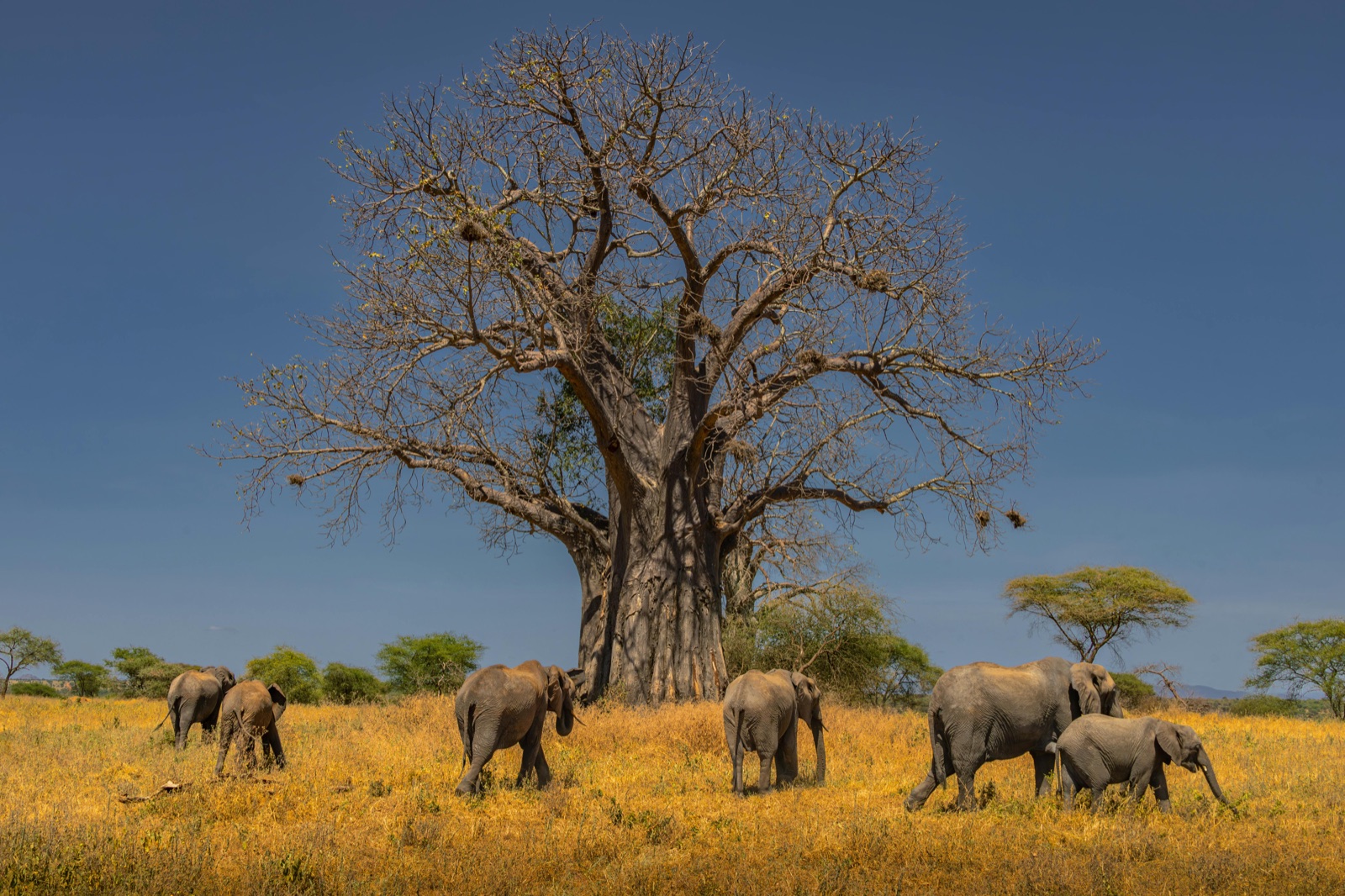
Wildlife Conditions in October by Park
Serengeti: Northern early, Central/Eastern late
ExcellentEarly October offers the last reliable Mara crossings. As the month turns, the herds move south through Lobo and the eastern Serengeti, and the Namiri Plains, the park's cheetah stronghold, come into their own with almost no vehicles. Dry and dusty with excellent access until the late-month rains.
Tarangire National Park
ExcellentOften the single best month of Tarangire's year. The last weeks before the rains concentrate the elephants along the river at maximum density, with the Silale Swamp drawing buffalo, lion, and everything between.
Ngorongoro Crater
ExcellentLate dry season on the floor: grass still short, game still dense, visibility still superb. Crowds ease noticeably through the month.
Lake Manyara
ExcellentLate dry-season concentration with thin vegetation and good waterbird numbers. First rains possible in the final week.
Ndutu / Southern Serengeti
GoodEarly rains can green the plains from mid-month, and advance herds sometimes arrive surprisingly early. Mostly quiet resident game and empty tracks.
Week-by-Week: October in the Field
| Week | What's Happening | Best Location |
|---|---|---|
| October 1-7 | Herds still in the northern Serengeti and Lobo, moving south slowly. Late Mara crossings possible and largely unwatched. The sleeper week. | Kogatende fringe / Lobo |
| October 8-14 | The main body in transit through Lobo and the eastern Serengeti along the Loliondo corridor. | Lobo / eastern Serengeti |
| October 15-21 | Herds spreading through the central and eastern Serengeti. The short rains approach and the skies turn dramatic. | Central Serengeti / Namiri Plains |
| October 22-31 | The first southern rains, when they come, trigger an acceleration south toward the fresh grass of the calving grounds. | Eastern plains toward the south |
Weather in October by Location
| Location | Temperature | Rainfall | Notes |
|---|---|---|---|
| Arusha | 11°C morning / 27°C afternoon | ~22-36mm over ~5-7 days | Hot and dusty, then the first showers and dramatic skies late month |
| Central Serengeti (Seronera) | 15°C morning / 28°C afternoon | ~51mm over ~9 days | Short rains arrive late month; the landscape starts greening |
| Ngorongoro Crater Rim | 12-17°C dawn / 28°C midday | ~42mm over ~10 days | Cloudier afternoons as the rains establish; mornings mostly clear |
| Zanzibar | 23°C night / 30°C day | ~66mm over ~9 days | Short rains beginning: brief afternoon showers, clear mornings, warm sea |
The Southbound Trigger Is Rain, Not a Date
Every migration chart shows the herds leaving the north in October, and every chart is guessing. The actual mechanism is simple: wildebeest follow fresh grass, and fresh grass follows rain. When the first significant storms fall on the southern Serengeti and Ndutu, typically somewhere between October 25 and November 5, the herds turn south hard and can cover the distance startlingly fast. Until that happens, they stay north and keep crossing the river.
The year-to-year spread is wide. An early-rain year empties the north by mid-October. A late-rain year keeps crossings running into November. This is why an October itinerary should be built with repositioning room rather than committed night-by-night to one sector, and why a guide on the radio network is worth more in October than in any settled month. We watch the southern weather, not the calendar.
Tarangire's Finest Hour
While everyone argues about where the wildebeest are, Tarangire quietly produces its best month of the year. By late October the park has gone four months without meaningful rain, the seasonal swamps have shrunk to the Silale, and the Tarangire River is the only reliable water across an enormous range. The elephants respond by massing along it in concentrations with few equals anywhere in Africa: hundreds visible in a single morning, families stacked behind families under the baobabs.
The elephants get the headlines, then everything else turns up too. Buffalo, lion, and big plains-game herds all compress onto the same water, and the leopards work the riverine trees. October Tarangire with three vehicles in sight is, for my money, a better wildlife day than chasing the tail of the migration through Lobo. If your October route has to drop something, do not let it be this park.
October Itineraries
8-Day Classic Tanzania Safari
From $2,355 pp8 Days / 7 Nights
Tarangire · Serengeti · Ngorongoro
October is this route's sweet spot: Tarangire at its peak, the crater in late-dry form, and the Serengeti nights positioned for the southbound herds.
View Full Itinerary7-Day Tanzania Safari Itinerary
From $2,195 pp7 Days / 6 Nights
Tarangire · Serengeti · Ngorongoro
The timed day-by-day route, which in October leans on Tarangire's elephants and the quiet eastern Serengeti.
View Full ItineraryCommon Questions: Tanzania Safari in October
Can I still see Mara River crossings in October?
Yes, especially in the first ten days, which are a genuine sleeper window: the herds keep crossing while they remain north, and most of the September visitors have gone home. Crossings often continue to mid-month, then turn sporadic as the southern short rains pull the herds away. The southbound return crossings are an underappreciated bonus.
When exactly do the wildebeest leave the north?
There is no exact date, and anyone who gives you one is reading a chart rather than the weather. The trigger is the first significant rainfall on the southern plains, historically somewhere between October 25 and November 5 but highly variable. Late-rain years keep herds north into November; early-rain years empty the north by mid-October.
Is October a good safari month overall?
Excellent, and underrated. The tail of the dry season keeps game tightly concentrated at water with superb sightlines, Tarangire hits its annual peak for elephants, and the crowds drop to three-to-five vehicles at a sighting from the August six-to-eight. The dramatic pre-rain skies are a bonus photographers plan around.
Where are the herds in October?
Early month: northern Serengeti around Kogatende and the Mara. Mid-month: in transit through Lobo and the eastern Serengeti along the Loliondo corridor. Late month: spreading through the central and eastern plains, accelerating south once the rains begin. An October route needs built-in flexibility to follow them.
Is October cheaper than August or September?
Partially. Some camp groups step rates down on October 1 while others hold peak until November 1, so October sits between peak and shoulder depending on the property. Availability is clearly better than August. Our 8-day Classic runs from $2,355 per person with park fees included, and October books with far less lead time than the peak months.
Is October good for Zanzibar?
Yes. The short rains begin as brief afternoon or evening showers, mornings are clear, the sea is warm, and the water visibility for diving is good. It is a better beach month than November, when the vuli rains peak. The standard pairing is five or six safari nights followed by four on the coast.