Tanzania Safari in September
September gets you August's safari with room to breathe. The herds are still on the Mara River at Kogatende, crossing in both directions, sometimes north one morning and back south three days later. The crocodiles are still working. What changes is the audience: the August school-holiday wave has gone home, and a crossing that drew six to eight vehicles last month draws four to six now. Add the driest, clearest weather of the year and Tarangire's elephant herds at their peak, and September is the month I recommend to travellers who want the famous spectacle without the famous queue.
Plan a September Safari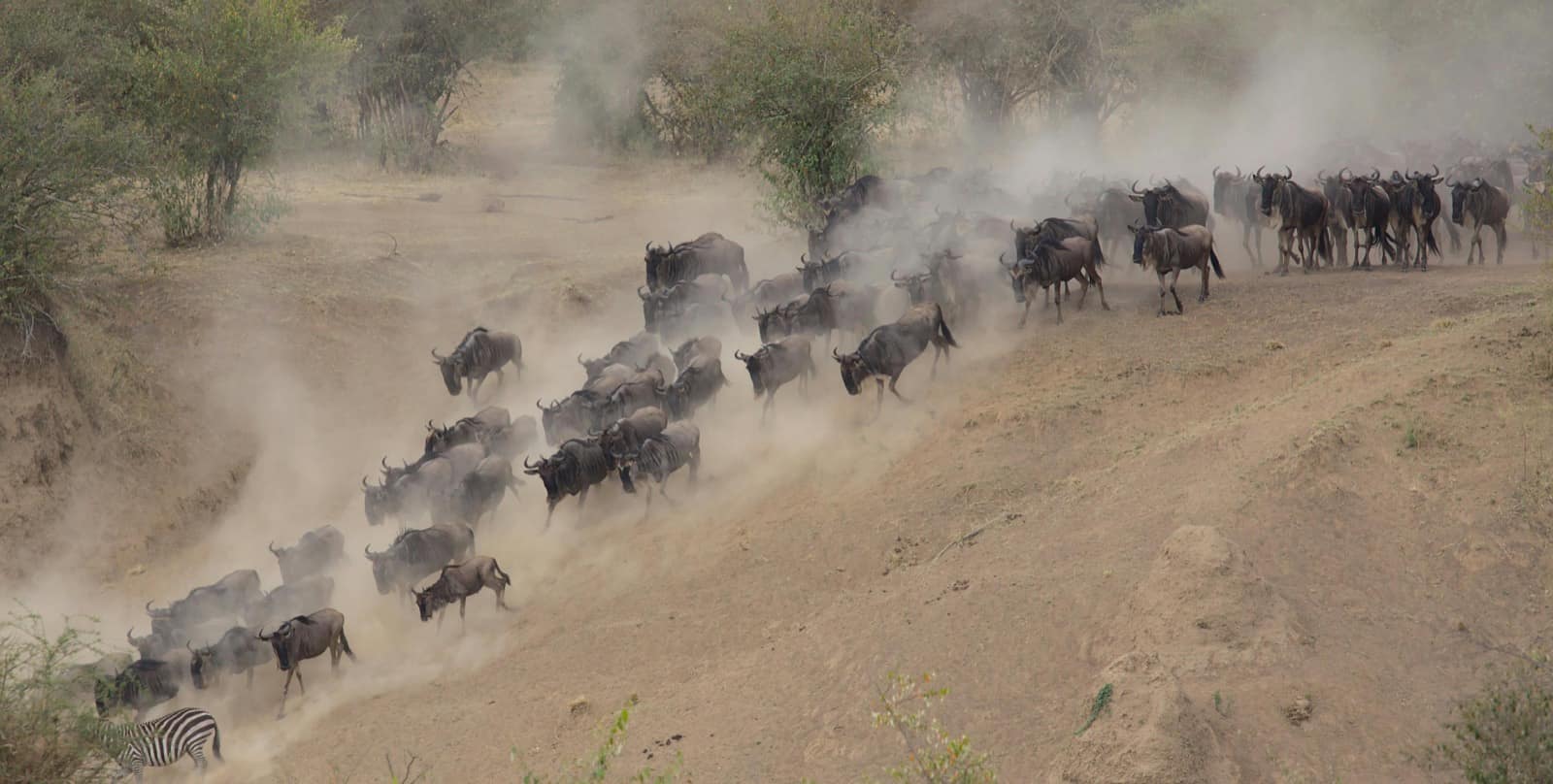
Wildlife Conditions in September by Park
Northern Serengeti (Kogatende / Lamai)
ExcellentPeak crossing country. Herds work the Mara River in both directions all month, with crocodiles in the water and lion and cheetah staked out on both banks. The Lamai Wedge allows off-road driving, rare inside the national park, and carries a fraction of the vehicles. Late month, the first southbound drift begins.
Tarangire National Park
ExcellentDeep dry season and arguably the park's finest hour: huge elephant herds along the river, the Silale Swamp acting as a magnet for everything, and game viewing that genuinely rivals the Serengeti at a fraction of the vehicle count.
Ngorongoro Crater
ExcellentPeak dry: short grass, maximum visibility, the resident black rhino, and the densest big-game viewing in Africa. The floor is busy. Descend at gate-open.
Lake Manyara
ExcellentDry-season concentration at its best: thin vegetation, game at the lake and springs, tree-climbing lions in their reliable window, and big waterbird numbers.
Ndutu / Southern Serengeti
GoodDry, quiet, and out of the migration's orbit. Resident game is dispersed but present, and you will have it almost to yourself.
Week-by-Week: September in the Field
| Week | What's Happening | Best Location |
|---|---|---|
| September 1-7 | Herds spread across the northern Serengeti and the Mara, with multiple crossings possible daily. August's crowds visibly thinning. | Kogatende / Lamai |
| September 8-14 | Peak crossing activity in many years, with dramatic back-and-forth river traffic as herds chase local storms on both sides. | Mara River, Kogatende and Lamai |
| September 15-21 | First pronounced southbound movement. Crossings continue but some herds begin drifting toward Lobo. | Northern Serengeti toward Lobo |
| September 22-30 | Southbound movement accelerating, crossings reducing, crowds easing further. Position flexibly rather than committing every night to the far north. | Lobo / northern Serengeti |
Weather in September by Location
| Location | Temperature | Rainfall | Notes |
|---|---|---|---|
| Arusha | 8°C morning / 24°C afternoon | ~5-20mm over ~2-3 days | The driest month: clear skies, low humidity, dusty roads |
| Central Serengeti (Seronera) | 14°C morning / 27°C afternoon | ~34mm over ~6 days | Dry and clear, short sparse grass, superb sightlines |
| Ngorongoro Crater Rim | 5-8°C dawn / 28°C midday | ~3mm over ~3 days | The coldest dawns of the safari year on the rim. Pack a real jacket. |
| Zanzibar | 22°C night / 29°C day | ~41mm over ~8 days | The coast's driest month: calm seas, eight hours of sun a day |
September vs August: The Same River, A Different Experience
The wildlife case for August and September is nearly identical: herds at the Mara, crossings most days somewhere along the river, predators in attendance. The difference is human. August is the peak of the northern-hemisphere school holidays, and the main Kogatende crossing points reflect it. By the first week of September the wave recedes, and the average crossing audience drops from six-to-eight vehicles to four-to-six, with the drop steepest at the famous crossing points.
Two more September advantages get less attention. The light is arguably the year's best: bone-dry air, low dust haze early in the month, golden grass. And lodge availability opens up, because the August crush forces overflow bookings into September and then leaves gaps. Prices, honestly, do not move much: September is still full peak at most camps, with the step-down arriving October 1 at some brands and November 1 at the rest. You are paying peak money either way; September just buys a better version of the same trip.
The Lamai Wedge: Where the Connoisseurs Watch the Crossings
The Lamai Wedge is the triangle of land between the Mara River and the Kenyan border, and it does two things almost nowhere else in Serengeti National Park does. It permits off-road driving, and it puts you on the north bank, which most vehicles approaching from the south never reach.
The effect is that the Wedge watches the same crossings as the southern bank with a fraction of the audience, and with the freedom to reposition as a herd shifts its crossing point along the river. The few camps up there are small and book out the better part of a year ahead. If the crossings are the reason you are coming, and you would rather watch them beside two vehicles than eight, the Wedge is worth planning the whole trip around. Pair three nights there with two in the central Serengeti for the resident cats on the way back south.
September Itineraries
Great Migration Safari
From $4,445 pp10 Days / 9 Nights
Northern Serengeti · Serengeti · Ngorongoro
Three nights at Kogatende for the crossings, central Serengeti for the resident cats, and a full crater day on the return. September is this route's best month.
View Full Itinerary8-Day Classic Tanzania Safari
From $2,355 pp8 Days / 7 Nights
Tarangire · Serengeti · Ngorongoro
Peak dry season across the whole circuit, with Tarangire's elephants at full strength. The strongest all-round month for the classic route.
View Full ItineraryCommon Questions: Tanzania Safari in September
Are the Mara River crossings still good in September?
Yes. Early-to-mid September often matches August's crossing pace with noticeably fewer vehicles, around four to six at a crossing instead of six to eight. The herds are still large, the crocodiles still active, and the back-and-forth river traffic continues all month. Even late September delivers, though the southbound drift begins and the far north empties gradually.
September or August: which is better?
The wildlife is essentially the same; the crowds are not. September runs 20 to 30 percent fewer vehicles at the crossing points, has better lodge availability, and arguably the best light of the year. August has the edge only if your dates are fixed by school holidays. Prices are peak in both months, so September is the better buy for the same money.
When do the crossings stop?
There is no fixed end date, because the herds answer to rainfall rather than the calendar. Crossings typically continue through September and into early or mid October, then turn sporadic as the first southern rains pull the herds back toward the calving grounds. A late-rain year keeps the river active well into October.
Where should I stay in September?
Kogatende in the northern Serengeti for the crossings, or the Lamai Wedge for the quieter north-bank views with off-road access. Pair the north with two nights in the central Serengeti for resident big cats. The small northern camps book out 9 to 12 months ahead for September; plan accordingly.
Is September cheaper than August?
Not meaningfully. Both are full peak at most camps, with rates stepping down October 1 at some brands and November 1 at the rest. What September offers at the same price is more availability and fewer vehicles. Our Great Migration Safari runs from $4,445 per person and the 8-day Classic from $2,355 per person, with park fees included.
What is the weather like in September?
The driest month of the year. Almost no rain anywhere on the circuit, afternoon highs of 25 to 30°C, and cold dawns inland: the Ngorongoro rim can touch 5°C at first light. Short sparse grass and clean dry air make for the best visibility of the year. The only real packing requirement is a proper warm layer for morning drives.
What else is at its best in September?
Tarangire. The dry season concentrates its elephant herds along the river in numbers few places in Africa can match, and the Silale Swamp pulls in everything else. The crater is in peak form, Lake Manyara's tree-climbing lions are in their reliable window, and Zanzibar has its driest, calmest month for a beach extension.